
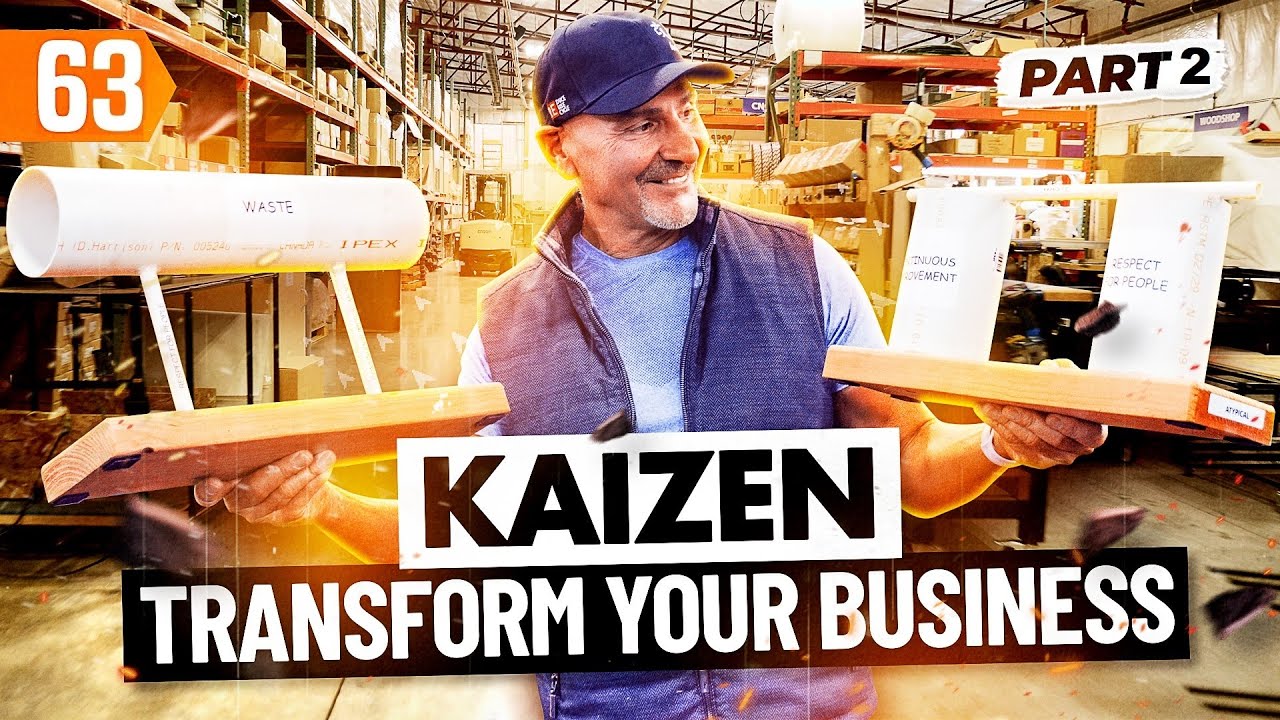
Turning Small Improvements into Big Success: The FastCap Journey of Paul Akers!
Case study ·
Paul Akers, the founder of FastCap, a woodworking tools company, has revolutionized how businesses approach continuous improvement.
Paul Akers, the founder of FastCap, is an entrepreneur and author known for his journey of turning minor improvements into big success. Through his company, FastCap, Akers has implemented a culture of continuous improvement and lean manufacturing principles that have transformed how businesses operate.
Introduction to Paul Akers and his company FastCap
Paul Akers started his career as a carpenter and cabinet maker. Frustrated with the inefficiencies and waste he encountered in his work, he became determined to find a better way. This led him to discover lean manufacturing principles, a philosophy focused on eliminating waste and maximizing value.
In 1997, Akers founded FastCap to create innovative solutions for the woodworking industry.
FastCap quickly gained recognition for its innovative products and efficient processes. The company's success can be attributed to Akers' dedication to continuous improvement and belief that small changes can lead to significant results.
Today, FastCap is a leading manufacturer of woodworking products and has expanded its reach to industries beyond woodworking. The company's success is a testament to Akers' commitment to continuous improvement and his ability to inspire others to embrace lean principles.
Through his journey with FastCap, Paul Akers has shown that by focusing on small improvements.
The Lean Operating System
Overview of the lean operating system practiced at FastCap
Paul Akers, the founder of FastCap, has transformed his company into a huge success by implementing the skeletal operating system. This system focuses on continuous improvement and eliminating waste in all aspects of the business.
At FastCap, every employee is encouraged to identify areas for improvement and make small changes that lead to significant results. This philosophy is based on the Japanese concept of Kaizen, which emphasizes continuous improvement through small, incremental changes.
One of the fundamental principles of the lean operating system is to eliminate waste. This includes not only physical waste, such as excess inventory or unnecessary steps in a process but also wasted time and energy. By streamlining processes and eliminating non-value-added activities, FastCap has improved efficiency and productivity.
Another critical aspect of the lean operating system is empowering employees. At FastCap, every employee is trained to identify and solve problems independently. This creates a culture of ownership and accountability, where everyone is responsible for making improvements.
The lean operating system also emphasizes the importance of data-driven decision-making. This allows them to make informed decisions that lead to better outcomes.
Overall, the lean operating system has been instrumental in FastCap's success. Paul Akers has turned minor improvements into significant achievements by focusing on continuous improvement, eliminating waste, empowering employees, and making data-driven decisions.
The 2 Second Lean Path To Success
Exploring the critical principles of the 2 Second Lean approach
Paul Akers, the founder of FastCap, a woodworking tools company, has revolutionized how businesses approach continuous improvement. Through his book, "2 Second Lean," Akers shares his journey and the principles that have led to his company's remarkable success.
The 2 Second Lean approach is based on the idea that minor daily improvements can lead to significant long-term success. Akers emphasizes the importance of simplicity and encourages in their work processes. Employees can create a culture of continuous improvement by focusing on making small changes that save just two seconds.
One of the key principles of 2 Second Lean is visual management. Akers believes that visual cues are essential for effective communication and problem-solving. Employees can quickly identify and address issues in real-time by using graphic tools such as whiteboards, charts, and color-coded systems.
Another principle is "going to the gemba," which means going where work is done. Akers encourages leaders to observe and engage with employees on the shop floor. This hands-on approach allows leaders to gain a deeper understanding of employees' challenges and provides opportunities for collaboration and improvement.
Akers also emphasizes the importance of employee empowerment. He believes every employee has valuable insights and ideas to contribute to the company's success. Companies can tap into a wealth of knowledge and drive innovation by empowering employees to take ownership of their work processes and improve.
Paul Akers' 2 Second Lean approach offers a practical and effective way for businesses to achieve continuous improvement and long-term success. Companies can create a culture of continuous improvement that drives innovation and success by focusing on simplicity, visual management, going to the gemba, and empowering employees.
Paul Akers, the founder of FastCap, a woodworking tools company, believes in the power of daily meetings to drive employee growth and build a strong company culture. By implementing this practice, Akers has transformed his small business into a thriving success story.
Understanding the importance of daily meetings in fostering employee growth and building a strong culture
Akers recognized that daily meetings are not just about discussing tasks and projects. They are an opportunity to inspire and motivate employees, foster collaboration, and create a sense of belonging within the company. Here are some key reasons why daily meetings have been instrumental in FastCap's success:
- Clear Communication: Daily meetings provide a platform for open and transparent communication. Employees can share their ideas, concerns, and progress, ensuring everyone is on the same page.
- Accountability: Employees are held accountable for their daily work by discussing goals and objectives. This helps to maintain focus and productivity.
- Celebrating Wins: Daily meetings allow employees to celebrate their achievements, no matter how small. Recognizing and acknowledging successes boosts morale and motivates individuals to continue striving for excellence.
- Continuous Improvement: Through daily meetings, FastCap encourages a culture of constant improvement. Employees are encouraged to share ideas for process optimization and problem-solving, leading to increased efficiency and innovation.
By prioritizing daily meetings as an integral part of their operations, FastCap has created an environment where employees feel valued, empowered, and motivated to contribute to the company's success. This commitment to growth and culture has been a driving force behind FastCap's remarkable journey.
Make Before and after Videos Of Improvements
Exploring the use of before and after videos to document and celebrate improvements at FastCap
Paul Akers, the founder of FastCap, a woodworking tools manufacturing company, has strongly advocated continuous improvement. One of the strategies he implemented to track and celebrate progress is using before and after videos.
Akers believes that documenting improvements through videos is a powerful way to showcase the impact of small changes. Employees can see their progress by capturing the "before" state and comparing it to the "after" state.
At FastCap, before and after videos are used in various business areas. From improving processes on the shop floor to enhancing customer service, every department is encouraged to document their improvements. These videos are then shared with the entire team during weekly meetings, allowing everyone to see the positive changes happening across the company.
Using before and after videos has proven effective in motivating employees at FastCap. Additionally, these videos serve as a learning tool for new employees, showcasing the company's commitment to improvement and innovation.
Akers believes that minor improvements can lead to significant success when consistently implemented. By documenting these improvements through before and after videos, FastCap has created a culture of continuous improvement that drives its success.
FastCap's journey under Paul Akers' leadership is a testament to minor improvements' power to achieve considerable success.
Give Tours and Practice Generosity Towards Others
Highlighting the practice of giving tours and practicing generosity towards others as a part of FastCap's success
Paul Akers, the founder of FastCap, has built a successful company by focusing on continuous improvement and fostering a culture of generosity. Giving tours and practicing generosity toward others is one essential practice contributing to FastCap's success.
Giving tours of the FastCap facility showcases the company's operations and allows visitors to see firsthand the commitment to excellence and continuous improvement. By opening their doors to customers, suppliers, and even competitors, FastCap demonstrates transparency and a willingness to share knowledge. This practice helps build trust and fosters collaboration and innovation within the industry.
In addition to giving tours, FastCap also practices generosity towards others. This includes sharing knowledge, resources, and profits with employees, customers, and the community. By investing in their employees' growth and development, FastCap creates a culture of empowerment and loyalty.
This enhances their reputation and builds strong relationships with customers and stakeholders who value socially responsible businesses.
FastCap has created a culture that values collaboration, innovation, and community engagement by giving tours and practicing generosity toward others. These practices have contributed to their success and positioned them as leaders in their industry. As other businesses look for success, they can learn from FastCap's journey and incorporate these practices into their strategies.
Sustaining Lean: The Challenge and Solution
Discussing the challenge of sustaining lean practices and how FastCap addresses it
When implementing lean practices in an organization, many companies face a common challenge: sustaining the momentum. One company that has successfully tackled this challenge is FastCap, led by its founder, Paul Akers.
FastCap is a company that specializes in providing innovative products and solutions for the woodworking industry. However, what sets FastCap apart is its products and its commitment to lean principles and continuous improvement. Paul Akers, the driving force behind FastCap's success, believes that minor modifications can lead to big success.
At FastCap, sustaining lean practices is not just a one-time effort but an ongoing journey. The company has implemented several strategies to ensure that lean thinking becomes ingrained in its culture and operations.
One of the key strategies employed by FastCap is daily improvement. These improvements can be as simple as organizing workstations or streamlining processes. By empowering employees to make these small changes, FastCap creates a culture of continuous improvement where everyone is actively involved in improving the company.
Another strategy employed by FastCap is visual management. The company uses visual cues such as whiteboards, charts, and signage to communicate goals, progress, and areas for improvement. This optical management system helps keep everyone aligned and engaged in the lean journey.
By focusing on sustaining lean practices, FastCap has achieved remarkable success. The company has experienced significant growth and has become a leader in its industry. Paul Akers' philosophy of continuous improvement has not only transformed FastCap but has also inspired countless other organizations to embrace lean thinking.
In conclusion, sustaining lean practices can be a challenge for many companies, but with the right strategies and mindset, it is possible to achieve long-term success. FastCap's journey under the leadership of Paul Akers serves as a shining example of how minor improvements can lead to big success.
FastCap's Business Growth with Lean
Examining the impact of lean practices on FastCap's business growth and success
FastCap, a leading manufacturer of innovative woodworking tools and accessories, has experienced remarkable business growth and success through implementing lean practices.
One of the critical benefits of lean practices for FastCap has been eliminating waste in its production processes. FastCap has identified and eliminated non-value-added activities through careful analysis and optimization of workflows, reducing costs and increasing productivity. This has allowed the company to deliver products faster and at a lower cost, giving them a competitive edge in the market.
Additionally, lean practices have enabled FastCap to improve quality control and customer satisfaction. By implementing standardized processes and continuous improvement initiatives, FastCap has identified and addressed issues proactively, ensuring that its products meet or exceed customer expectations.
Furthermore, lean practices have empowered FastCap to foster a culture of continuous learning and innovation. By encouraging employee involvement and engagement, FastCap has tapped into its workforce's collective knowledge and expertise, driving innovation and problem-solving at all levels of the organization. This has allowed them to stay ahead of market trends and customer demands, fueling their business growth.
FastCap's adoption of lean practices has played a pivotal role in its business growth and success, eliminating waste, improving quality control, and fostering a culture of continuous learning.
Summarizing the journey of Paul Akers and FastCap and the lessons learned from their lean transformation
Paul Akers, the founder of FastCap, has demonstrated the power of continuous improvement and lean thinking in achieving remarkable success.
Firstly, embracing a culture of continuous improvement is essential. By encouraging employees to identify and implement minor enhancements daily, FastCap has achieved significant growth and success over time. This approach not only enhances efficiency.
Secondly, transparency and communication play a crucial role in driving organizational change. Paul Akers emphasized the importance of sharing information openly and involving employees in decision-making.
Furthermore, Paul Akers emphasized the significance of setting clear goals and tracking progress. By implementing visual management systems and regularly reviewing performance metrics, FastCap could stay focused on its objectives and make data-driven decisions.
Lastly, Paul Akers highlighted the importance of leadership commitment and leading by example. By actively participating in lean practices himself, he inspired his team to embrace change and continuously strive for improvement.
Overall, the journey of Paul Akers and FastCap is a testament to the power of minor improvements in driving big success. Businesses can transform their operations and achieve remarkable results by adopting a lean mindset, embracing continuous improvement, fostering transparency, setting clear goals, and demonstrating leadership commitment.
Details
- Category
- Business Services
- Business Type
- Manufacturing